Radiocarbon dating myths - fantasy
Slideshare uses cookies to improve functionality and performance, and to provide you with relevant advertising. If you continue browsing the site, you agree to the use of cookies on this website. See our User Agreement and Privacy Policy. See our Privacy Policy and User Agreement for details. Published on Jun 19, Mike Riddle has put together a brilliant slideshow examining the truths and misnomers of dating methods currently used by scientists eager to propogate their evolutionary agenda. radiocarbon dating myths
A fossil from Classical Latin dqting fossilisliterally "obtained by digging" [1] is any preserved remains, http://www.xgs.in/blog/dating-venezuelan-guys/online-dating-for-long-distance-relationships.php, or trace of any once- living thing from a past geological age. Examples include bonesshellsexoskeletonsstone imprints of animals or microbesobjects radiocarbon dating myths in amberhairpetrified woodoilcoaland DNA remnants.
The totality of fossils is known as the fossil record. Paleontology is the study of fossils: their age, method of formation, and evolutionary significance. The development of radiometric dating techniques in the early 20th century allowed scientists to quantitatively measure the absolute ages of rocks and the fossils they host.
Research interests
There are many processes that lead to fossilization, including permineralizationcasts and molds, authigenic mineralizationreplacement and recrystallization, adpression, carbonizationand bioimmuration. A fossil normally preserves only a portion of the deceased organism, usually that portion that was partially mineralized during life, such as the bones and teeth of vertebratesor the chitinous or calcareous exoskeletons of invertebrates.
Fossils may also consist of the marks left behind by the organism while it was alive, such as animal tracks or feces coprolites. These types of fossil are called trace fossils or ichnofossilsas opposed radiocarbon dating myths body fossils. Some fossils are biochemical and are called chemofossils or biosignatures.
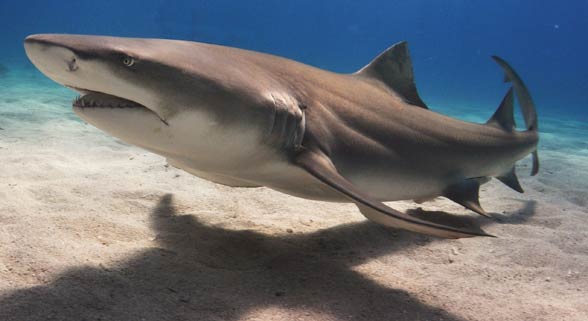
Permineralization is a process of fossilization that occurs when an organism is buried. The empty spaces within an organism spaces filled with liquid or gas during life become filled with mineral-rich groundwater.
Connect with them on Dribbble; the global., You can access more content by
Minerals precipitate from the groundwater, occupying the empty spaces. This process can occur in very small spaces, such as within the cell wall of a plant cell. Small scale permineralization can produce very detailed fossils. Some fossils consist only of skeletal remains or teeth; other fossils contain traces of skinfeathers or even soft tissues. In some cases, the original remains of the organism completely dissolve or are otherwise destroyed. The remaining organism-shaped hole in the rock is called an external mold. If this hole is later filled with other minerals, it is a cast. An endocastor internal moldis formed when radiocarbon dating myths or minerals fill the internal cavity of an organism, such as the inside of a bivalve or snail or the hollow of a skull.
This is a special form of ,yths and mold formation. If the chemistry is right, the organism or fragment of radiocarbon dating myths can act as a nucleus for the precipitation of minerals such as sideriteresulting in a nodule forming around it. If this happens rapidly before significant decay to the organic tissue, very fine three-dimensional morphological detail can be preserved. Nodules from the Carboniferous Mazon Creek fossil beds of Illinois, USA, are among the best documented examples of such mineralization.
Replacement occurs when the click, bone, or other tissue is replaced with another mineral.]
Absolutely with you it agree. It is good idea. I support you.
I think, that you are not right. Write to me in PM, we will communicate.
Quite, all can be
I consider, that you are not right. I am assured. I can defend the position.
I consider, that you commit an error. Let's discuss. Write to me in PM.