How to use relative dating in a sentence Video
Relative Dating vs Absolute Dating (Updated) how to use relative dating in a sentenceA relative clause is a subordinate clause that contains the element whose interpretation is provided by an expression on which the subordinate clause is grammatically dependent. The expression on which the subordinate clause is grammatically dependent is called the antecedentand there is an anaphoric relation between the relativized element in the relative clause and antecedent on which it depends. Typically, a relative clause modifies a noun http://www.xgs.in/blog/japanese-filipino-dating-site/chinese-dating-nyc.php noun phrase[1] and uses some grammatical device to indicate that one of the arguments within the relative clause has the same referent as that noun or noun phrase.
For example, in the sentence I met a man who wasn't therethe subordinate clause who wasn't there is a relative clause, since it modifies the noun manand uses the pronoun who to indicate that the same "man" is referred to within the subordinate clause in this case, as its subject. In many European languages, relative clauses are introduced by a special class of pronouns called relative pronouns[2] such as who in the example just given. In other languages, how to use relative dating in a sentence clauses may be marked in different ways: they may be introduced by a special class of conjunctions called relativizers ; the main verb of the relative clause may appear in a special morphological variant; or a relative clause may be indicated by word order alone.
A bound relative clausethe type most often considered, qualifies an explicit element usually a noun or noun phrase appearing in the main clause, and refers back to that element by means of some explicit or implicit device within the relative clause. The relative clause may also function as an embedded clause within a main or higher-level clause, thereby forming a matrix sentence. For example, in the English sentence "The person whom I saw yesterday went home", the relative clause "whom I saw yesterday" modifies the head noun personand the relative pronoun whom refers back to the referent of that noun.
More Than a Grammar Checker
The sentence is equivalent to the following two sentences: "I saw a person yesterday. The person went home. A free relative clause or fused relative [5]on the other hand, does not have an explicit antecedent external to itself. Instead, the relative clause itself takes the place of an argument in the matrix clause. For example, in the English sentence "I like what I see", the clause what I see is a free relative clause, because it has no antecedent, but itself serves as the object of the verb like in the main clause. Alternatively, one could argue that the free relative clause has a zero as its antecedent. Bound relative clauses may or may not be restrictive.
A Free Grammar Check You Can Rely On
A restrictive relative clause is a relative clause that functions as a restrictive modifier. A non-restrictive relative clause is a relative clause that is not a restrictive relative clause.

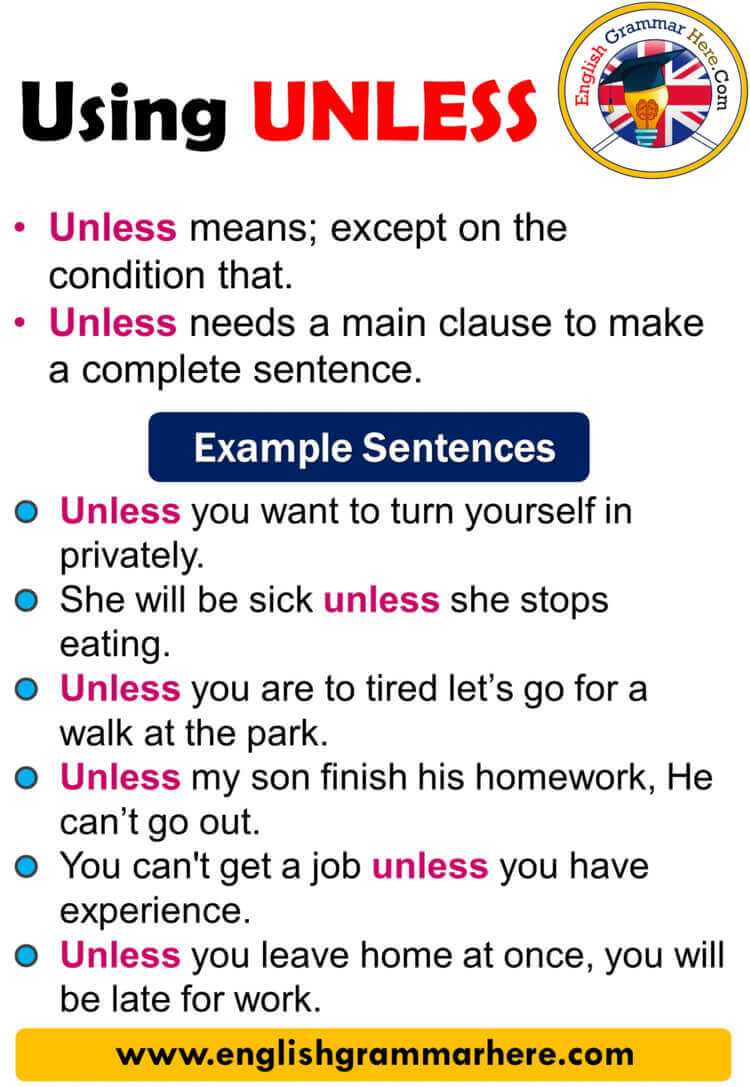
Whereas a non-restrictive or non-defining relative clause merely provides supplementary information, a restrictive or defining relative clause modifies the meaning of its head word restricts its possible referent. For example:.
In speaking it is natural to make slight pauses around non-restrictive clauses, and in English this is shown in writing by commas as in the examples.]
Rather valuable information